


Does an extra year of compulsory schooling raise numeracy skills?
Core argument: Germany's compulsory schooling reform, which added a ninth grade, raised numeracy skills of basic-track students by 0.2 standard deviations, equivalent to an 8–9 percentage point gain in rank within the numeracy skill distribution.
The German compulsory schooling reform, which added an additional ninth grade, resulted in a 0.2 standard deviation increase in numeracy skills for basic-track students, equating to a rise of 8-9 percentage points in their rank within the numeracy skill distribution. This reform, analyzed through a natural experiment using PIAAC data, highlights the long-term benefits of extended schooling on labor-market relevant cognitive skills. However, the reform had no significant impact on literacy skills, as the estimated effects were not statistically precise. The findings suggest that while increased schooling can enhance numeracy, literacy skills may require different educational strategies. The study underscores the importance of resource allocation and curriculum design in maximizing the effectiveness of educational reforms.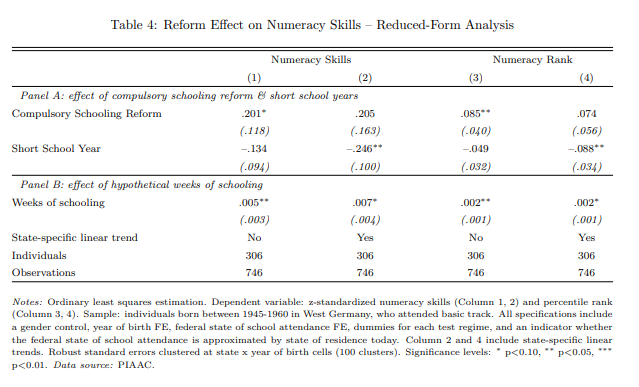

Ed Comment, “I agree the effects are often largest on the most capable students, something many of these researchers seem to relegate to the footnotes.”
Note in his conclusions he does mentioned the composition of the student population as an important factor in considering the results“….In the context of ongoing technological change and the associated increase in labor markets’ demand for high-skilled workers, this study implies that schooling expansions may be an efficient way to equip new generations of workers with marketable skills, which are essential for long-run labor market success. Nevertheless, the effect of such reforms is always dependent on the student population affected by the reform.Thus, effects on skills may vary when length of schooling is increased for students attending higher school tracks. Furthermore, the better the schools and teachers are prepared for the reform, the more effective is the reform. Scarcity of resources (e.g., insufficient number of teachers) and poorly designed curricula may prevent positive reform effects….”